
Pothead
Judge a man by the size of his kitchenware
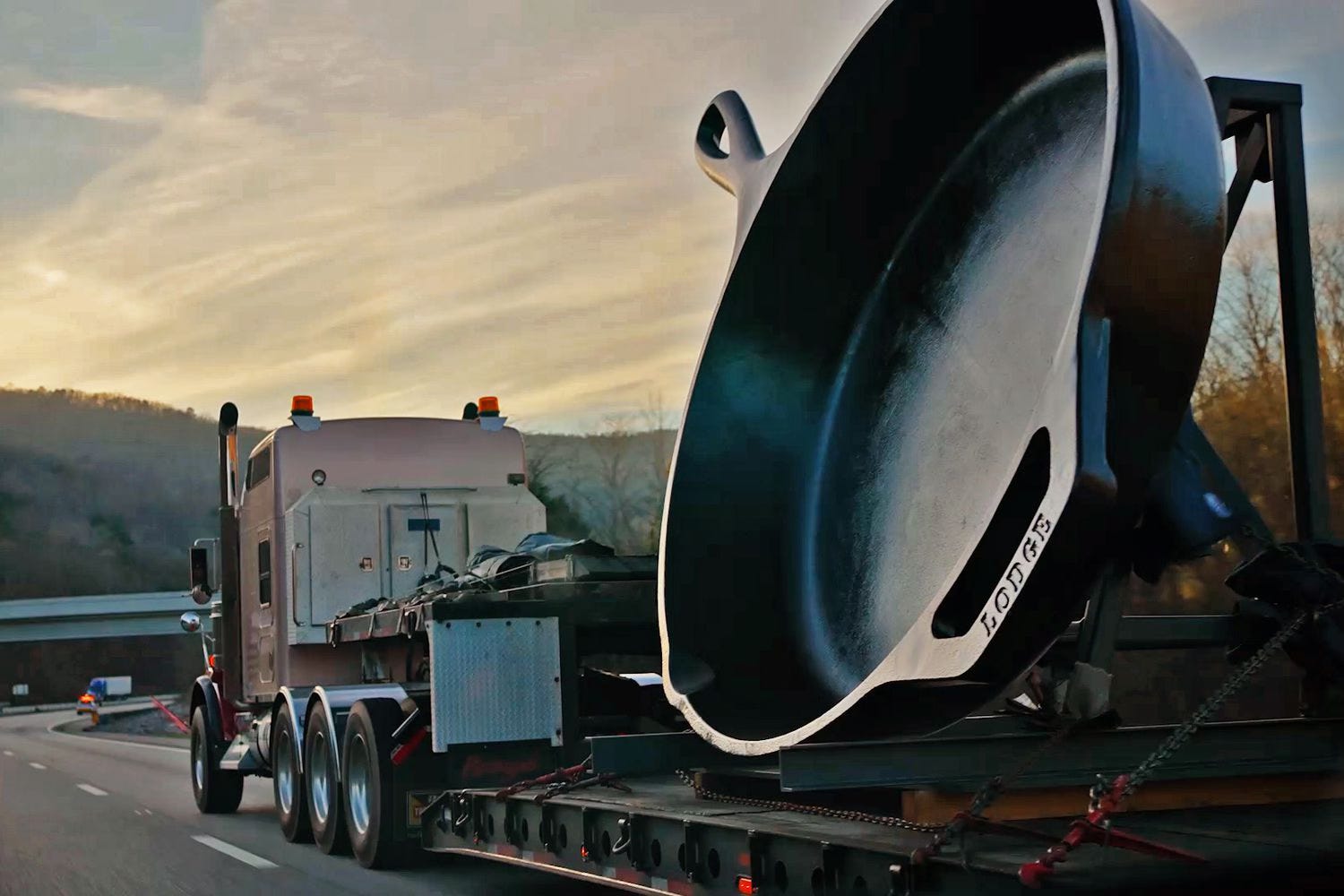
My brother-in-law has a ‘Goose Pot’ It’s a Le Creuset, since you ask. It would take a goose easily. Or maybe three pig heads. Or you could use it to bath a reasonable size toddler. It’s black. It probably cost as much as my first car and everyone in the family laughs at it.
I admit, my family are unusually cruel, but they delight in tutting about ‘Boys’ Toys’ and as they wolf down another of his fantastic dinners, they delight in reminding him that, once again he’s managed to feed them all without actually getting the huge thing down off the shelf.
I’m writing this at my dining table. It’s a beauty. The classic Ercol extender with the double leaf insert in the centre. It comfortably seats eight when extended – it’s *always* extended – but it seats ten with a squeeze. Which is good because there are ten Mid-Century ‘Green Spot’ dining chairs stacked over in the corner. And ten sets of cutlery in the Finn Juhl sideboard. And ten sets of crockery.
We’ve lived ‘set up for ten’ for as long as we’ve been married. Do you know how often an enthusiastic food professional gets to cook for ten?
Maybe twice a year.
By almost any standard, that much under-utilised resource is a disgusting display of Conspicuous Consumption. The symbolism of food makes it more problematic. I am permanently equipped to feed a large number, when large numbers struggle to feed themselves.
And yet...
When I first moved to London I lived in a squat. A vile hole at the top end of Camberwell Grove. Today they’re some of the most expensive houses in South London, back then they were a community of Anarchist vertical villages. Probably 40 random wastrels per block, usually sharing a sink.
One night I came home from work and had to throw someone out of my bed. I hadn’t invited him there. He just had some kind of ancient right to “Squat” in my squat. After 40 years, I still haven’t been able to think out any moral or legal rebuttal to his position. In the event, I used a cricket bat.
I had no money for entertainment, I’d severed contact with family, I had no friends and my home was so awful, I couldn’t go there to do anything but sleep. I used to catch the bus to places like Hampstead, Highgate and Primrose Hill. Nice places. Places where, back then, people lived who were the sort of people I dreamed of being.
I walked. Miles through suburban streets. Looking at two things in every single house. Through the basement window, the kitchen. Golden warm. Kids doing homework. Some sort of revolting dog. Almost certainly a sodding AGA they’d “had to strengthen the floor” to install. Then I’d pull my stinking old donkey jacket tighter around myself and look up at the window on the ground floor.
In every single house it seemed. Sitting room or study. Opposite side to the entrance. Curtains always drawn back, low, warm desk lamp casting an inviting pool of light and against the wall, in the alcove between window and hearth, a full-height bookshelf jammed with orange-spined Penguins, artfully punctuated with Faber hardbacks, outsized volumes on art reclining horizontally.
The Japanese have a beautiful word for anything you might need, and in this case it’s 積ん読. Tsun, meaning ‘to pile’ and doku, ‘to read’. Tsundoku is used in the sense of accumulating books without the necessity to read them. The classic TRP or ‘To-Read Pile’.
Later, because I’m a Boomer, I predictably got to live in one of those houses. I remember installing the bookshelf. But it troubled me. I wondered for ages. OK... I was seeing a therapist at the time and so predisposed to almost onanistic self-examination. But was I practising performative tsundoku? What was I trying to ‘say’ with the books.
And I realised that, when I’d been gazing in from the other side... I didn’t *want* the books. I didn’t need to break in and steal them. I didn’t in that frozen second, resolve relentless self-improvement until I could afford the books – though that would have made a better story arc.
What was most important to me, freezing my balls off on the pavement, was that there existed the sort of people that had those books. I didn’t want to have them, I needed to be reminded of what they represented.
Christ. No wonder my therapist quit to become a Bhikkhu.
I’m English. A culture with no culture. I don’t keep kosher or avoid eating beef. I’ve never celebrated midsummer with crayfish, I don’t do Diwali, or seder or volunteer at the gurdwara. The sum total of what ‘my people’ do is an occasional brittle and rebarbative Sunday lunch.
Yet we still need, it seems, our ritual objects. Were I Sikh I’d carry a Kirpan everywhere and I wouldn’t use it as a weapon. Its purpose would be to remind me of my honour, my duty to defend the weak and innocent, and to fight against injustice.
So, weirdly, I don’t feel anything more than the trace of guilt about my over-specced dining arrangements; nor in spite of the cruelty of the rest of my tribe, do I find my brother-in-law’s pot absurd or amusing. It doesn’t offend me that he keeps, unused, a vessel that could feed a village. I won’t even be disappointed if he never gets to use it to cook me a goose.
Owning the pot says he’s the kind of man who, at the slightest excuse, would willingly cook dinner for ten. A man not just equipped but inclined to show true hospitality, kindness, and generosity. Who would welcome guests and do anything to make them happy.
If ‘my’ people are too busy, too uptight, too preoccupied or just too plain miserable to take him up on that offer... well that’s their loss. But if he can get eight mates together, he can grab his pot and bring them all round to mine.
Between us, we’ve got ALL the gear.
More of this please
Really enjoyed reading this, thank you