
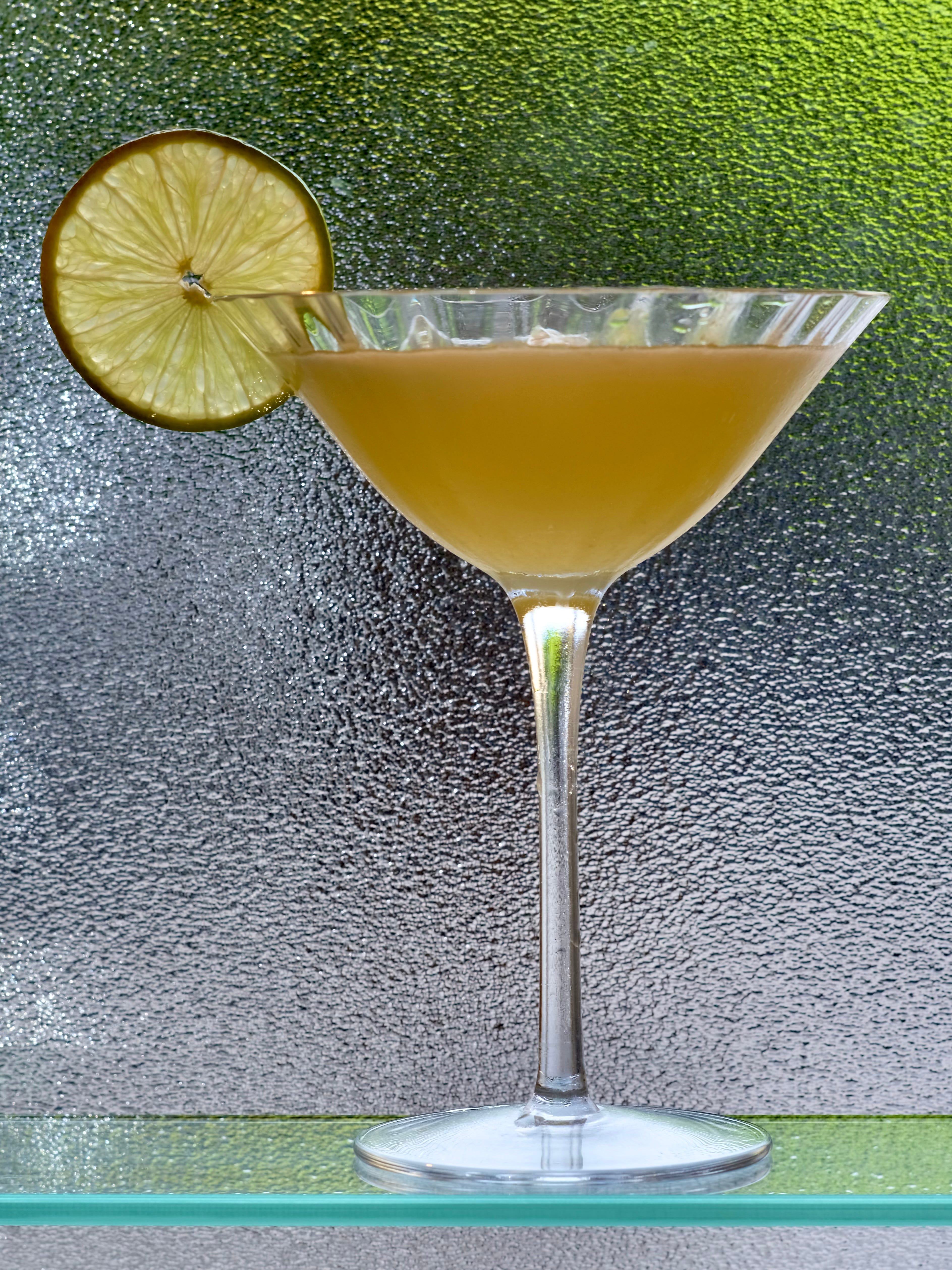
I'd really set my mind firmly against ever drinking a cocktail with pineapple in it.
It's difficult to juice fresh pineapple without heavy equipment so any cocktail calling for it is referring to something out of a tetrapack with about the same relationship to real fruit as a carton of Um Bongo. A drink garnished with pineapple would be humiliating, a drink 'in' a pineapple would be a kind of aesthetic waterboarding.
But then I read Richard Godwin's brilliant substack on the 'Special' Daiquiri served at the Hotel Nacional de Cuba from the 1930s onwards, and it sounded, to a confirmed daiquiri fan... oddly appealling. The further I went down the rabbithole, the better the story got.
The Hotel Nacional de Cuba would fit comfortably on the Trip Advisor page between The Overlook and Bates Motel. Monumental, fascistic and creepy. It was designed by New York architects who appear to have taken The Fountainhead seriously. It was financed by an American bank and built by US contractors. Unsurprisingly, it attracted that cream of American society, who could afford to discretely avoid prohibition the same way their scions seem to avoid tax today. 'Cuban'? Hmmmm.'Nacional'? Not so much. Charles "Lucky" Luciano stayed there. In hindsight, that might have been a moral high point.
Early recipes for the Nacional were roughly half and half rum and pineapple juice, enlivened with the juice of half a lemon and a slug of 'apricot brandy'.
I'm always interested when apricot brandy crops up. It's a fairly niche product in France but in the US, a company called Old Mr Boston made a domestic version. As prohibition lifted they began macerating sweet dried American apricots in neutral alcohol (that's a uniquely American interpretation of 'Brandy'). Bear in mind that neutral alcohol - ie vodka - had no market in the US at the time, so a version softened and sweetened with dried fruit might appeal to consumers. It added alcoholic strength and sweetness to a drink with no really polarising flavour and must have been staggeringly cheap to produce on an industrial scale. All they needed to do was create a market.
Which they did. Brilliantly. By publishing the Old Mr Boston's Official Bar Tender's Guide and distributing it to effectively every bar in the US. About 11 million copies were printed in 68 editions. All the cocktails a barman needed. And the most amazing thing was exactly how many of them suddenly featured the inoccuous, hard-to-hate, US made, apricot brandy.
It's not surprising - in fact it's entirely brilliant - that the Nacional featured this weird stuff from the get-go.
I could have bought some sort of posh pineapple juice, but I bet that's not what they did at the Hotel Nacional.
If you have half an hour to dive down a history hole and get seriously angry, start digging into the role the United Fruit Company (later Dole) played in the politics of South and Central America, specifically in propping up the Batista regime and in 1961, the Bay of Pigs fiasco.
No. No artisanal local product here. They'd have opened a can of Dole pineapple juice at the Hotel Nacional de Cuba. You can bet your shaker on it.
Pineapple is interesting stuff, particularly when it's been processed. It's not a citrus fruit - it's a different family altogether - though it does contain some citric acid. It also contains a fair bit of malic acid... that's the stuff they put in kids' 'sour' sweets. So it has strong tart and sour elements. It can be packed in its own juice so it doesn't need to be preserved like other fruits, in a sugar syrup. It also contains an enzyme called papain that breaks down proteins. I'm not sure if it's the papain that does it but clobbering pineapple in the blender also creates a fantastic texture. An almost soapy gel.
So instead of fretting over an artisanally hand-harvested pineapple at Waitrose, I bought a tin of Dole pineapple rings (packed in juice), blitzed them to hell and passed the results, with some force, through a fine sieve. That would be pretty authentic, I thought. And it was amazing. With the sharp and sweet balanced, half way to being a sour mix, but with the texture of hair conditioner (iirc).
Also, after a fair amount of fiddling and tasting, my preference toward the simpler daiquiri began to emerge. It needed a little lime, it needed a little sugar syrup.
Some recipes add a dash of bitters and more power to their elbows, but then I remembered that President Kennedy was a daiquiri fan and rather liked a splash of Falernum in his.
Cuba? The Mob? CIA operations through US corporations? Yes... we have to get JFK in there somewhere
60g rum
22.5g pineapple gloop
15g apricot brandy
15g fresh lime juice
7.5g simple syrup
2 dashes Falernum
(do yourself a favour and double these quantities)
Shake. Garnish with lime (though you wouldn't regret a lightly salted rim either).
You know those old American cars they still keep alive in Havana? Absurdly atmospheric. Ridiculously, pompously American. No reason to survive but somehow lovingly reappropriated and irresistably fascinating to blokes of a certain age?
I reckon the Nacional could be all that, in a glass.