
My bloody Instagram has been hacked so for the forseeable future, 25,000 people won’t get to read my nightly eructation. But you will. I hope you enjoy it. I’m certainly enjoying the extra breathing room….
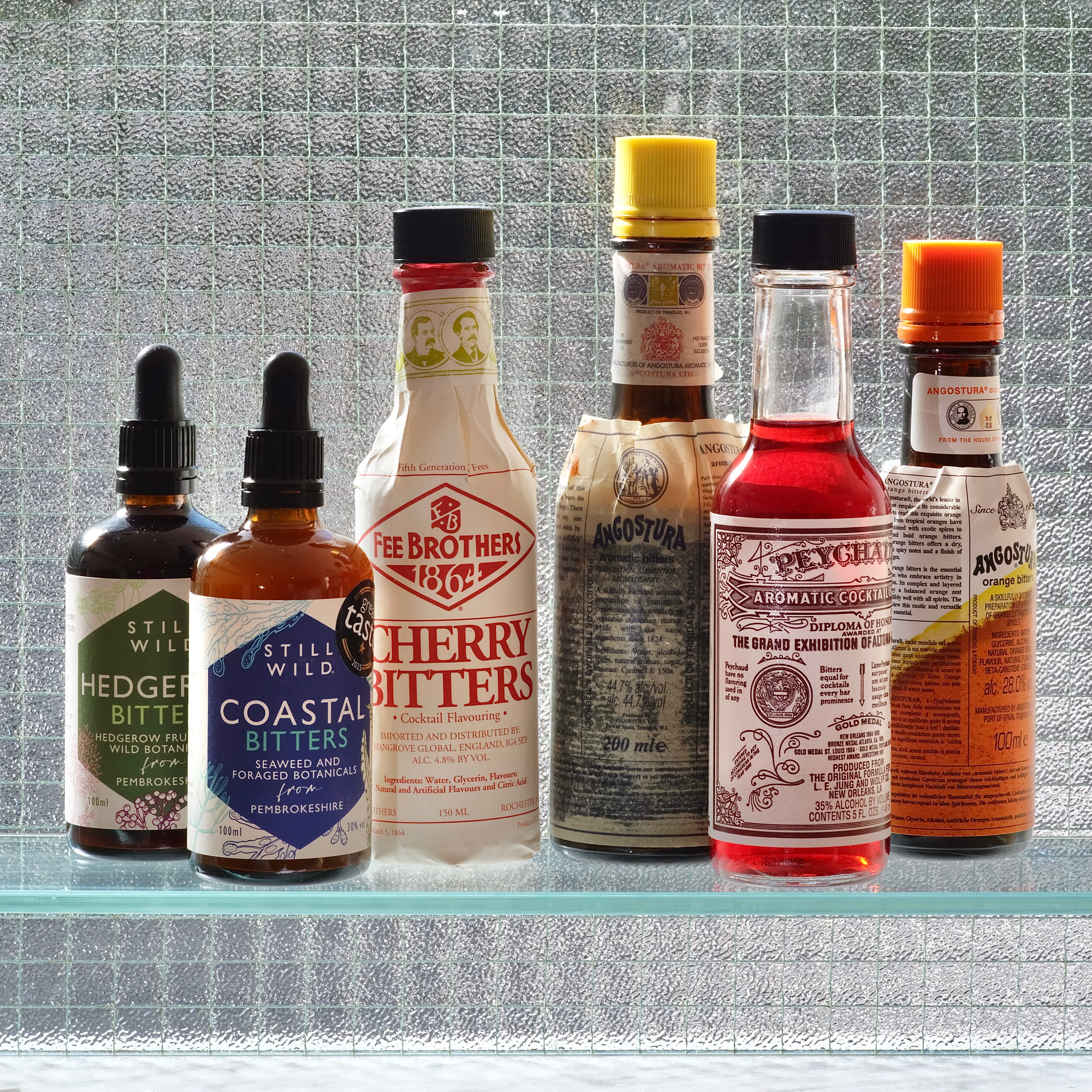
Bitters, most specifically, orange bitters were an essential ingredient of the early martinis. Before the addition of the onion, remember, a Gibson was simply defined as a strong, dry martini *without* bitters. But that bitter orange scent, on top of everything else happening in the glass was a defining factor.
Bitters are intriguing things. They're often derived from ancient medical recipes, intended as aids to digestion or tonics for hangover. There's even a coherent theory that cocktails originated as a more pleasant way to consume the 'medicine' in bitters. But for modern purposes, bitters are a way of adding aromatic hints over the main alcoholic hit of a cocktail. And very nice they are too.
I just pulled some of mine out of the cabinet. You can see there the big knackered looking bottle of Angostura (everyone's bottle should look like that. The oversize label is part of the origin myth and the stuff has a 4 century shelf-life so it's rare to see a fresh looking bottle). It's bitter, spicy and makes an excellent pink gin (A sort of English, nautical Proto-Martini).
There are some orange bitters, made by the same company - effectively the same stuff with a strong Seville orange flavour, and that's good in a Martini or a Manhattan.
The Peychaud's has a more distinctive 'profile' that instantly brands a drink as 'Southern', so it's vital in Obituaries, Sazeracs, Vieux Carrés and the like.
Fee’s Bros cherry is pleasant. It’s a product of the last cocktail ‘revival’ when innovation followed the fruit path. Their rhubarb one is pleasantly autumnal
The last two are modern bitters by some excellent young craftsmen in Wales, foraging their own mad combinations and creating something that does the bitters' 'trick' of floating a layer of aromatics over the cocktail, but with what one should doubtlessly refer to as 'curated' profiles. In this case intentionally redolent of Coast or Hedgerow... and if that sounds like a perfume ad... well that's exactly the territory we're playing in.
Bitters are fascinating. Bitters are lovely... but they also produce something of an intellectual conundrum. Consider this...
The aromatic 'botanicals' in London Dry Gin include juniper berries plus coriander, cardamom, orris root, angelica root, nutmeg, orange peel, cinnamon bark and others.
Noilly Prat Original Dry Vermouth contains 18 Botanicals including, chamomile, coriander, elderflower, orris root, sweet orange, blessed thistle, chincona, nutmeg, bitter orange, gentian root
Bitters are more difficult to parse generally contain chincona or gentian root as their bittering agent and then variously paprika, cinnamon, clove, cardamom, ginger, allspice, caraway and cracked black pepper are popular, depending on brand. Orange bitters use that as a base but add bitter oranges, sometimes coriander, anise, and often caramel.
And that's a simple, very old fashioned dry martini. The aromatics are repeated, in many cases, and once you consider the proportions, say 70 gin, 10 vermouth, 1 orange bitters you can see that ... well it's insanely confused. It's impossible to imagine that even the most refined palate could distinguish half the things going on in there and, if at any point you decided to remove 3 or 4 of the more homeopathic ingredients, no human without access to a laboratory could distinguish what you'd done.
An anthropologist called Robin Dunbar once suggested “a cognitive limit to the number of stable, meaningful social relationships a person can maintain”. It’s called the Dunbar Number: a core of 5 family, 15 good friends, 50 ‘just’ friends, and 150 contacts. Beyond that 500 acquaintances and 1,500 people you can recognize. A kind of ranking of number against cognitive salience.
I reckon there’s a similar phenomenon in the food world. All those patent ‘secret’ spice blends, that work on the same principle in reverse. You can chuck in as many flavours as you like but the number that are cognitively meaningful, which you can ‘relate to’ is finite and surprisingly small. I don’t reckon humans can distinguish individual meaningful flavours beyond maybe 11. Why so specific? Well apparently, since 1930, nobody’s been able to parse the ‘secret’ mix of spices in KFC. Let’s call this ‘Sanders Number’ after the Colonel who discovered it.
Make your Martini same thing out of a highly 'curated' craft gin, with enough aromatics to make it distinctive and interesting. Use a craft vermouth, similarly managed and a modern themed bitters and... your brain starts to lock up just after your palate has short-circuited.
My working solution at the moment is to keep the gin and vermouth as fixed points and play with the bitters. Some of the results are interesting.
Last month, I locked down the gin, left out the bitters and fiddled with the vermouths. Once again. Occasionally interesting.
Maybe next month I'll fix on a vermouth and mess with the gin... or maybe I won't...
Sometimes, when some well-meaning soul gives me a gin made with foraged snail shells, whey and woodash derived vermouth and a bitters designed to remind me of the locker room on a Viking longship, there are only two possible reactions...
a) It tastes just like a martini. Why did you bother?
b) It doesn't taste anything like a martini. Why did you bother?